
Why Does My Pet Have Bad Breath?
October 21, 2026 /
Dr Caroline Kerr
It is easy to overlook bad breath, especially if your dog or cat is getting older. Many people think a strong smell is just part of life with pets.
When bad breath sticks around, it can be an early sign that dental disease is starting to develop in your pet’s mouth.
That matters because dental disease is extremely common. Research cited by the World Small Animal Veterinary Association suggests that at least 80% of dogs and 70% of cats may develop periodontal disease by 3 years of age.
One of the challenges is that pets rarely show obvious dental pain. Your dog might finish dinner even with sore gums, and your cat may keep eating even if a tooth is hurting.
If you have noticed your pet’s breath is unpleasant, it is worth taking a closer look at what might be going on.
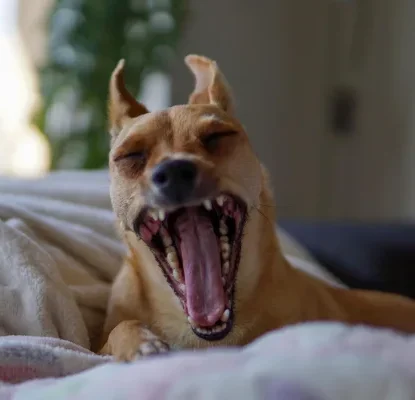
Dental disease usually starts quietly. Plaque is a soft film containing bacteria that builds up on the teeth. When it remains around the gumline, those bacteria irritate the gums and can cause inflammation.
Tartar is different. Minerals in saliva harden deposits on the tooth surface, creating a rough surface where more plaque can collect.
Over time, you may start noticing more than the smell. Gums can become red or swollen, tartar can become clearly visible, and infection can develop around affected teeth. More advanced dental disease can become painful and damage the tissues supporting the teeth.
Bad breath does not tell the whole story, but it is a sign that your pet’s mouth deserves some extra attention.
Yes. This is why dental disease can sometimes progress further than you might expect. Pets often keep eating as usual, even when their mouths are uncomfortable.
Some eventually develop more noticeable changes. They may drop food, chew differently, favour one side of their mouth or become reluctant to eat harder foods. Red gums, drooling and facial swelling can also occur.
If you wait for these signs, the problem may already be more advanced by the time you notice them. While eating habits can give us clues, they do not rule out the possibility of dental pain.
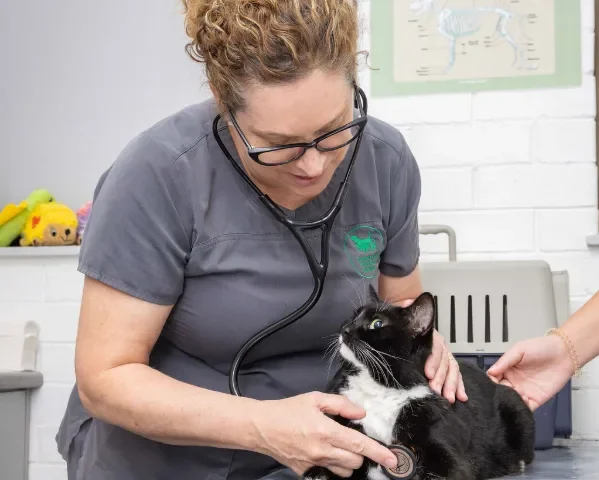
When I check your pet’s teeth, I start by looking carefully at their mouth, teeth and gums. My team and I look for visible plaque and tartar, inflamed gums, damaged teeth and any other changes that might suggest dental disease. An examination while your pet is awake provides useful information, but some things we cannot fully assess without anaesthesia.
This is why I recommend dental checks even if your pet seems comfortable at home. Dental disease often develops slowly, and many pets show very few visible changes.
If I find something during the examination that needs treatment, I will talk you through the next steps based on what we have found together.
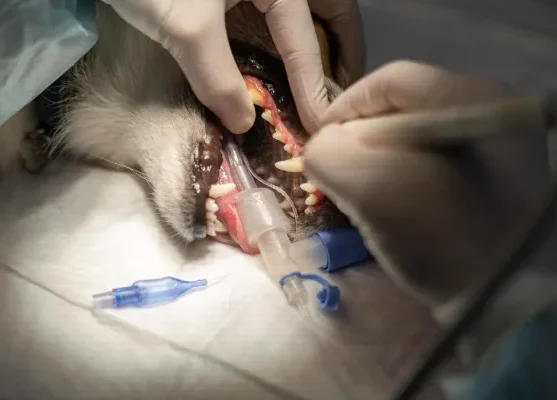
If I find significant plaque, tartar or dental disease, I may recommend a dental procedure under anaesthesia.
Anaesthesia allows my team to carefully examine your pet’s mouth and clean the teeth both above and below the gumline. We remove plaque and tartar with scaling, then polish the tooth surfaces to help keep them healthy.
If a tooth is badly affected, removal may be the kindest option. I always base my recommendations on what is best for your individual pet and what we find during the assessment.
Removing only the visible tartar while your pet is awake does not treat the disease under the gumline. This is why anaesthesia is recommended for a thorough dental examination and treatment.
Caring for your pet’s teeth at home can make a real difference, especially if you start before any major dental problems develop. Brushing your pet’s teeth daily is one of the most effective ways to control plaque. Regular brushing is recommended because plaque can build up quickly on tooth surfaces.
Not every dog or cat will be comfortable with brushing right away. Starting slowly and making the experience gentle and predictable can help your pet adjust.
Dental diets, chews, and other oral-care products may also help control plaque and tartar. When choosing these products, the Veterinary Oral Health Council seal provides a useful indication that a product has met its standards for dental effectiveness.
Home care does not replace veterinary checks. It works alongside them.
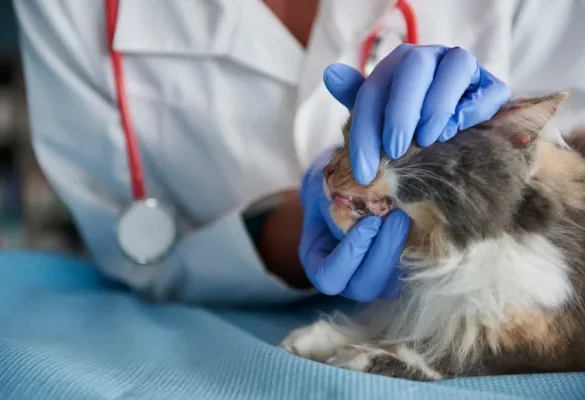
An occasional unusual smell after eating is one thing. Breath that is consistently unpleasant is worth discussing with your veterinary team. This is particularly important if you can also see tartar or red gums. Drooling, difficulty chewing, dropping food, or swelling around the mouth also warrant attention.
You do not need to diagnose dental disease yourself. In fact, you cannot see everything that may be happening around a tooth simply by lifting your pet’s lip. If you are in Logan and your dog or cat has developed persistent bad breath, a dental check can help establish what is actually happening. Sometimes the answer is straightforward. Sometimes the smell is the first outward clue that the mouth needs more attention. Either way, bad breath is worth taking seriously.

Weight changes can affect more than how your pet looks. Monitoring weight and body condition can provide useful clues about their overall health.

Vomiting and diarrhoea can happen for many reasons. Understanding the other signs your pet is showing can help determine when a veterinary assessment may be needed.
Persistent bad breath should not simply be considered normal. It is commonly associated with oral and dental disease, particularly when plaque, tartar or gum inflammation is present.
Bad breath can be an early sign of dental disease in dogs, but smell alone cannot tell you how advanced the problem is. A dental examination is needed to properly assess the teeth and gums.
Cats can continue eating even with painful dental disease. Appetite alone, therefore, does not rule out problems with the teeth or gums.
Persistent bad breath is worth having checked, particularly when it is accompanied by tartar, red gums or changes in eating. Dental disease may be present even when your pet otherwise seems well.
Other than bad breath, owners may notice visible tartar, red or swollen gums, drooling, dropping food or chewing differently. Some pets show few obvious signs, particularly during the earlier stages of disease.
Plaque forms as a soft bacterial layer on the teeth. Mineral deposits from saliva can then harden around that plaque and form tartar, which provides a rough surface where more plaque can accumulate.
Regular brushing helps control plaque and is considered the gold standard for home dental care. Daily brushing is recommended where a pet will comfortably tolerate it.
Anaesthesia allows the veterinary team to examine and clean areas that cannot be treated properly while a pet is awake. This includes cleaning beneath the gumline, where periodontal disease develops.

Contact Info
Opening Hours
Monday to Friday: 8:00am – 6:00pm
Saturday: 8:00am – 1:00pm
Sunday: CLOSED
Closed on public holidays